
- The stronger you are, the lighter every station load feels relative to your maximum.
- Build around six patterns: squat, hinge, lunge, push, pull and carry.
- Heavier, lower-rep work early in a block, more strength endurance nearer the race.
- Two sessions a week is enough for most people, dropping to one near race day.
- Keep hard strength and hard running on the same days to keep easy days easy.
What kind of strength HYROX needs
HYROX is not a strength competition. You never lift anything close to your maximum, and nobody wins the race on the sled push alone. But strength underpins almost every station. A sled that is 40 percent of what you could push at your strongest feels very different from one that is 80 percent, and that difference compounds over eight stations.
There are two qualities to build. The first is base strength: how much force your legs, hips, trunk and upper body can produce. The second is strength endurance: the ability to keep producing a good amount of force repeatedly while tired. Base strength raises your ceiling, strength endurance lets you use it for an hour or more.
Most people training for HYROX lean too heavily on conditioning and neglect base strength, especially in the early months. It is the less glamorous part of the plan, but it makes everything else easier.
Strength work also makes you more robust. Tendons, joints and muscles that are used to heavy load cope far better with the repetitive pounding of lunges, burpee broad jumps and 8 km of running. Many of the niggles that stop people training for HYROX come from doing a lot of conditioning on a body that has not been strengthened to handle it.
The six patterns that matter
Rather than chasing specific exercises, make sure your programme covers these movement patterns every week:
- Squat: sled push, wall balls, lunges. The back squat, front squat and goblet squat all work.
- Hinge: sled pull, rowing, SkiErg and every kettlebell pick-up. The Romanian deadlift and trap bar deadlift are excellent.
- Lunge and single leg: sandbag lunges, running. Walking lunges, split squats and step-ups.
- Push: wall ball throw, sled push arms, burpees. Presses and push-ups.
- Pull: sled pull, SkiErg, rowing. Rows, pull-ups and pulldowns.
- Carry: farmers carry and grip for everything else. Heavy carries and holds.
Trunk strength sits underneath all of these. You do not need endless sit-ups, but bracing work such as dead bugs, Pallof presses and loaded carries transfers directly to the sleds and lunges.
Sets, reps and load through a training block
How you lift should change as the race gets closer. A simple progression over a 12-week block looks like this:
- Early weeks, base strength: 3 to 5 sets of 4 to 8 reps on the main lifts, leaving one to three reps in reserve. Longer rests of two to three minutes.
- Middle weeks, mixed: keep one heavy lift per session and add strength endurance work such as 2 to 3 sets of 12 to 20 reps on lunges or goblet squats.
- Final weeks, specific: heavier work maintained with fewer sets, plus circuits of station-like movements at race load.
Progress steadily. Add a little weight or a rep when a set feels comfortably within your reserve, as described in progressive overload. Big jumps in load in a HYROX block tend to lead to sore legs that ruin your running.
Strength endurance work deserves a word of caution. It is tempting to make every set a burning, high-rep grind because it feels like HYROX. A little goes a long way. Two or three hard sets of a lunge or squat variation in a session is plenty; the race-specific sessions and simulations will provide the rest.
Fitting strength around running
The classic worry is that lifting will interfere with running, or the other way round. For recreational athletes training a handful of times a week, the interference effect is modest, and the benefits of strength work far outweigh it. The guide to hybrid training explained goes into the detail.
A few practical rules make it work:
- Two strength sessions a week in the base phase, one or two in the build phase, and one lighter session in the final weeks.
- Put heavy lower body strength on the same day as a hard run or interval session, ideally with a few hours between them, so your easy days stay easy.
- Avoid heavy leg sessions the day before your most important run of the week.
- If you have to choose, keep the strength session and cut an easy run, not the other way round.
Two sample sessions
Session A, lower body focus:
- Back squat: 4 sets of 6.
- Romanian deadlift: 3 sets of 8.
- Walking lunges: 3 sets of 20 steps.
- Sled push: 4 lengths at moderate to heavy load.
- Dead bug: 3 sets of 8 per side.
Session B, upper body and carry focus:
- Push press or overhead press: 4 sets of 5 to 6.
- Pull-ups or lat pulldown: 4 sets of 6 to 10.
- Single-arm dumbbell row: 3 sets of 10 per side.
- Farmers carry: 4 x 40 m heavy.
- Wall balls: 3 sets of 15 with strict depth.
Common strength mistakes in HYROX training
- Only doing circuits. Endless high-rep circuits build fatigue, not strength. You need some heavier, lower-rep work.
- Skipping single leg work. Lunges and running are both single leg activities, so split squats and step-ups matter.
- Ignoring the upper body pull. The SkiErg, sled pull and row all rely on your back and lats.
- Going too heavy too close to the race. New personal bests in the final fortnight bring soreness, not speed.
- No progression. Doing the same weights for months means your strength stalls.
Technique matters as much as load. A squat or deadlift done well at a moderate weight builds more useful strength than a heavy one done badly, and it keeps you training rather than nursing a sore back.
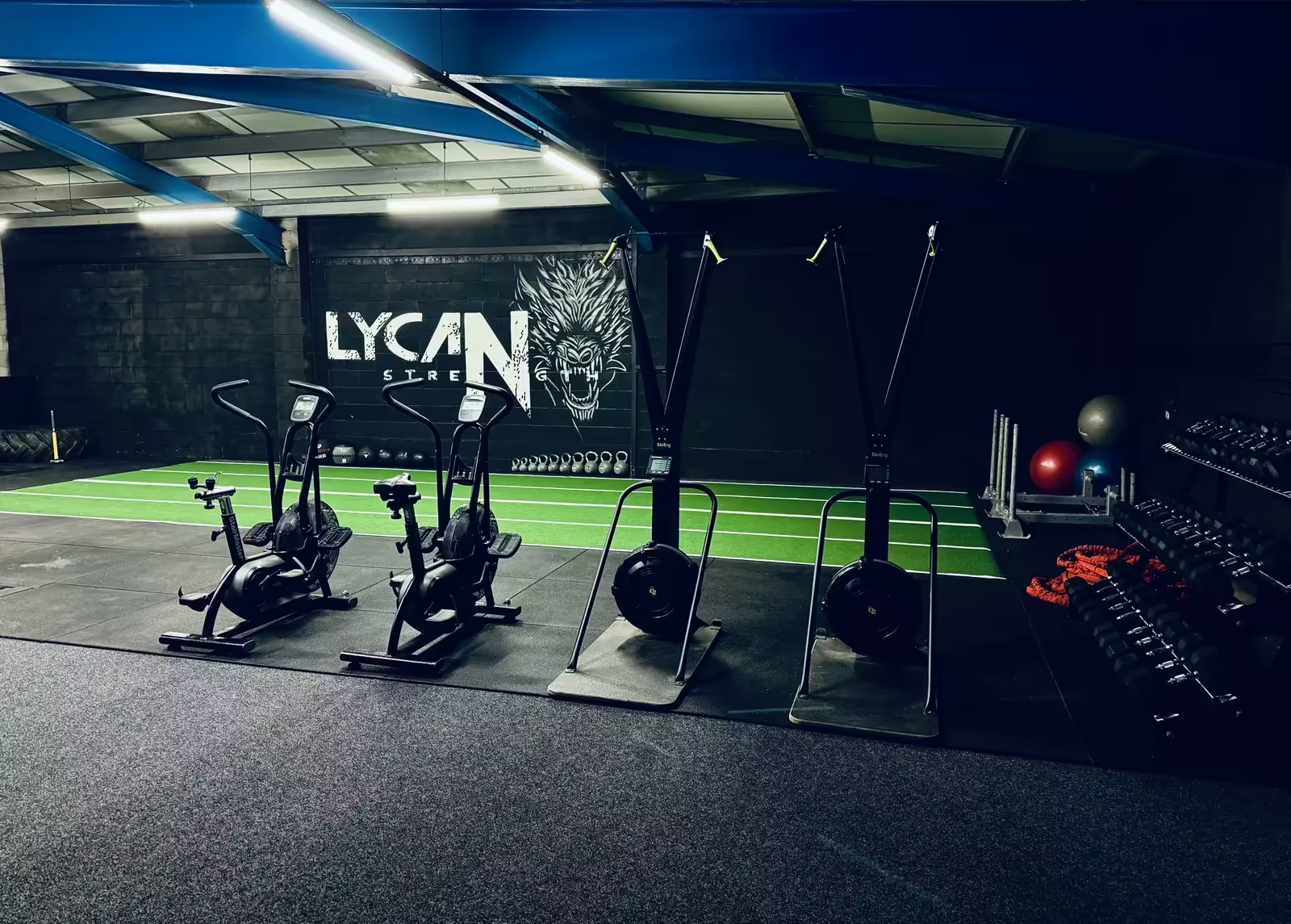
Lycan Strength runs Full Body on Mondays, Upper on Tuesdays and Wednesdays and Lower on Thursdays, which is a straightforward way to cover both sessions. The full list is on the class timetable.
Members' guide
Keep reading with your free week
The full guide is for members and people on a free trial. Claim 7 days free and it opens straight away on this device, along with every other guide.
Already a member? Log in to read it
Unlock the full guide
Seven days of classes, free. We will be in touch to book your first session.
Questions
How many days a week should I lift for HYROX?
Two strength sessions a week suits most people, dropping to one lighter session in the final weeks before the race.
What are the best strength exercises for HYROX?
Squats, deadlift variations, walking lunges, presses, rows or pull-ups, and heavy carries. Together they cover every station.
Will lifting weights slow down my running?
For most recreational athletes, no. Sensible strength training tends to support running by making you more robust, as long as you place sessions thoughtfully in the week.
General guidance for healthy adults. If you have a medical condition, injury or are pregnant, check with a health professional before changing your training or diet.