
- Caffeine helps endurance, power and repeated hard efforts, and makes effort feel lower.
- Most people need less than they think. One or two coffees before training is plenty.
- Healthy adults are generally advised to stay under 400 mg a day, and 200 mg in pregnancy.
- Caffeine lingers for hours, so an evening session plus a big pre-workout often means poor sleep.
- Anyone with heart problems, high blood pressure or anxiety should check with a GP first.
What caffeine does for training
Caffeine works mainly on the brain. It blocks adenosine, a chemical that builds up while you are awake and makes you feel tired. The practical result is that a hard effort feels a little easier, so you can push slightly harder or for slightly longer at the same sense of effort.
Research consistently shows benefits for endurance work, repeated sprints, and to a smaller degree strength and power. That covers most of what hybrid training involves, from hard conditioning on the rower to a heavy lower body day. Caffeine can also sharpen focus and reaction time, which is useful when technique matters.
It is not magic. Poor sleep, low fuel and a flat week will not be rescued by a double espresso. Think of it as a small boost on top of the basics.
How much is enough
Studies on performance usually use around 3 mg per kg of body weight, with little extra benefit above 6 mg per kg and more side effects. For a 70 kg person, 3 mg per kg is about 210 mg. Many people feel a clear benefit from less, especially if they rarely drink coffee.
NHS figures give a rough idea of what everyday drinks contain, though brands and brewing vary a lot:
- Mug of instant coffee: about 100 mg
- Mug of filter coffee: about 140 mg
- Mug of tea: about 75 mg
- Can of cola: about 40 mg
- 250 ml can of energy drink: about 80 mg
Coffee shop drinks can be much stronger than a mug at home, and pre-workout powders often contain 200 to 300 mg in a single scoop. For healthy adults, European food safety advice sets 400 mg a day as the level not linked with health concerns, and single doses up to about 200 mg as safe. The NHS advises no more than 200 mg a day during pregnancy.
Timing it around your session
Caffeine from a drink peaks in the blood roughly 30 to 60 minutes after you have it. For most sessions, that means a coffee as you leave the house or on the drive in.
- Early morning training. A coffee before a 6am class is a sensible way to wake up, ideally with a small snack if you train hard. See what to eat before a workout.
- After work. If you train around 6pm, a coffee at 5pm can help, but it will still be active at bedtime for many people.
- Race day. For a HYROX event, practise your caffeine plan in training first. Our HYROX race day nutrition guide covers the details.
The sleep trade-off
Caffeine has a half-life of roughly five hours in many adults, and longer in some. Half of a 200 mg pre-workout taken at 6pm can still be in your system at 11pm. Even if you fall asleep easily, research shows caffeine late in the day can cut total sleep time and sleep quality, and sleep is when a lot of recovery happens.
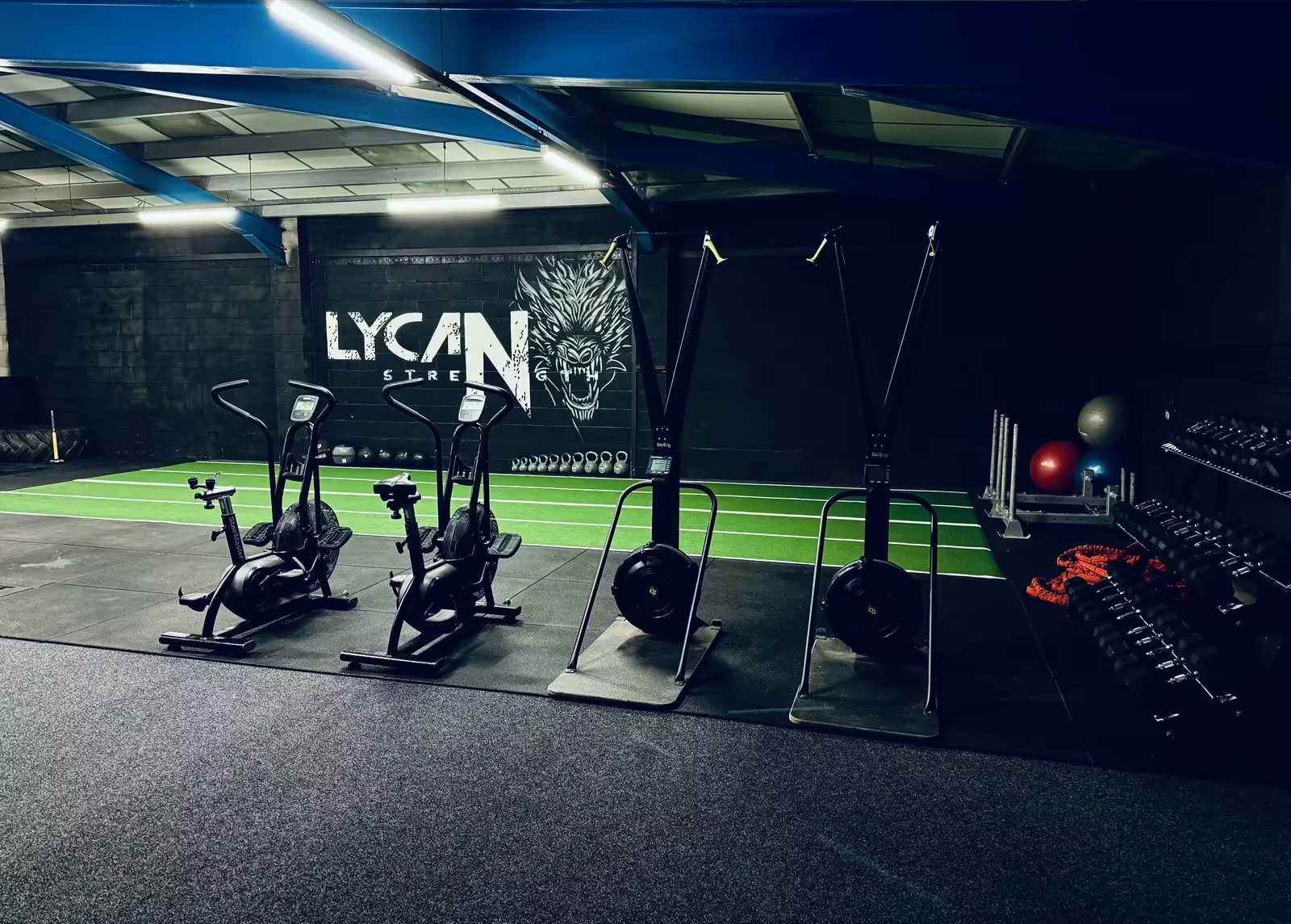
For someone heading to a 7pm class at Lycan Strength on a Monday or Wednesday, this is the biggest cost to weigh up. A strong pre-workout might give you a slightly better session, then take something back from the next three days. A reasonable rule is to have no caffeine within six to eight hours of bed, or to use a much smaller dose for evening training.
If you are regularly tired, needing more caffeine is a sign to fix sleep rather than increase the dose. Our guide to sleep for recovery has practical steps.
Pre-workout supplements
Most pre-workout powders are caffeine plus a few extras. Beta-alanine causes the tingling feeling and has some evidence for efforts lasting one to four minutes. Citrulline has mixed evidence. Many products also contain ingredients with little research behind them, sometimes hidden inside a 'proprietary blend' with no doses listed.
If you like them, choose one that lists the exact dose of every ingredient and start with half a scoop. Never stack a pre-workout with energy drinks or strong coffee, and be wary of products bought online from outside the UK, which have been found to contain banned stimulants. For tested athletes, only use products batch-tested under a scheme such as Informed Sport.
Building your own caffeine plan
Rather than copying someone else's routine, set up a simple plan and test it over a few weeks. Caffeine responses vary a lot between people, partly because of genetics and partly because of how much you already drink.
- Work out your current daily intake from coffee, tea, cola and energy drinks. Many people are surprised by the total.
- Pick your two or three hardest sessions each week. Those are the ones worth a pre-training dose.
- Start with around 100 mg, roughly one mug of instant coffee, 45 minutes before training.
- Note how the session felt and how you slept that night. If sleep suffered, move the dose earlier or make it smaller.
- Only increase the dose if the smaller amount clearly did nothing, and stay within about 3 mg per kg.
For long sessions or races lasting over an hour, some people split their caffeine, taking part before the start and a smaller amount partway through, often as a gel or gum. Practise this on a long weekend session before you rely on it at an event.
Who should be careful
Caffeine is not right for everyone. Speak to your GP before using it to boost training if any of these apply:
- You have a heart condition, palpitations or high blood pressure
- You experience anxiety or panic attacks, which caffeine can make worse
- You are pregnant, trying to conceive or breastfeeding
- You take medication that interacts with caffeine
- You are under 18
Stop and get advice if caffeine gives you a racing heart, chest pain, shakiness or dizziness during exercise. Chest pain during training always needs urgent attention: stop and call 999.
Members' guide
Keep reading with your free week
The full guide is for members and people on a free trial. Claim 7 days free and it opens straight away on this device, along with every other guide.
Already a member? Log in to read it
Unlock the full guide
Seven days of classes, free. We will be in touch to book your first session.
Questions
Does caffeine dehydrate you?
Not at normal intakes. Regular tea and coffee drinkers adapt, and the NHS counts tea and coffee towards your daily fluid.
Is it better to train with or without caffeine?
Most people perform slightly better with a moderate dose, but it is optional. If it affects your sleep or makes you anxious, you will recover and train better without it.
How long before a workout should I have coffee?
About 30 to 60 minutes before you start. Caffeine gum works faster, in around 10 to 15 minutes.
Do I need to cut caffeine out to reset my tolerance?
Not completely. Reducing your everyday intake for a week or two, then using a normal dose before key sessions, is usually enough to feel the effect again.
General guidance for healthy adults. If you have a medical condition, injury or are pregnant, check with a health professional before changing your training or diet.