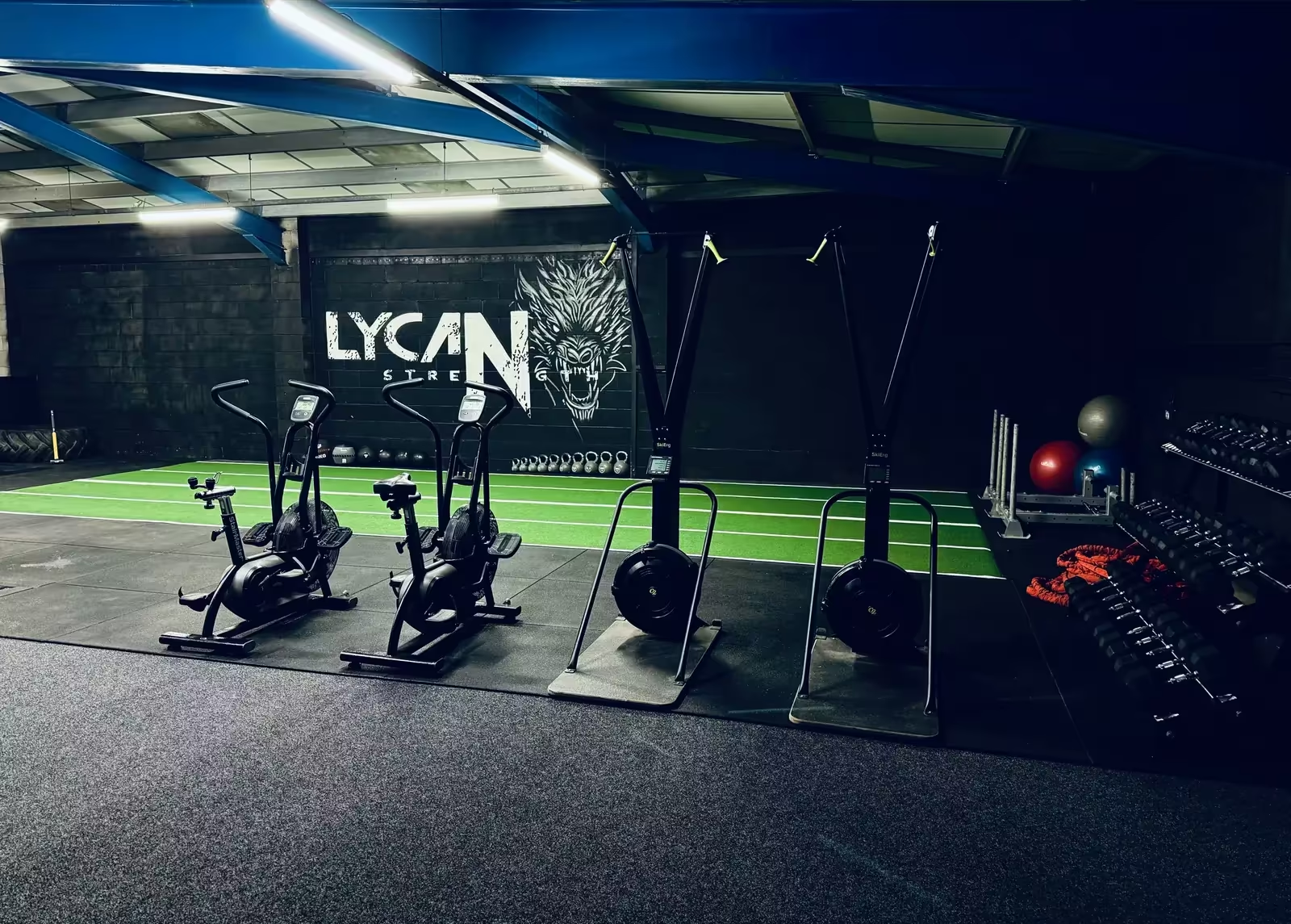

- Warm-ups improve performance and help reduce injury risk. Cool-downs mainly help you settle.
- Most sessions need 5 to 15 minutes of warm-up. Early mornings and heavy days need the upper end.
- The most valuable part is rehearsing your first exercise at lighter loads.
- After very hard efforts, keep moving easily for a few minutes rather than stopping dead.
Why a warm-up is worth it
Warm muscles contract faster and more forcefully, your joints move more freely, and your nervous system coordinates movement better once it has had a few minutes to rehearse. That is not theory. You can feel the difference between your first set of squats and your fourth.
There is also good evidence that structured warm-up programmes reduce injury rates, particularly in team sports where they have been studied most. Much of the benefit seems to come from the strength, balance and landing work built into those programmes, not just from getting warm. For the rest of us, the message is the same: a thoughtful warm-up is part of the session, not something to rush through.
The mental side counts too. Five or ten minutes of movement gives you time to leave the working day behind and focus. People who walk in from the car park and go straight into a heavy set usually find it feels awful, and they are more likely to get hurt.
A simple structure: RAMP
Many coaches use a framework called RAMP. It is easy to remember and works for almost any session.
- Raise: a few minutes of easy cardio to lift your heart rate, breathing and body temperature. Rower, bike, skipping, a light jog.
- Activate: wake up the muscles you will rely on. Glute bridges, band pull-aparts, dead bugs, light carries.
- Mobilise: move the joints through the ranges you will need. Lunges with a twist, hip openers, arm circles, deep squat holds.
- Potentiate: build towards the session itself. Lighter sets of your first lift, a few short, sharp efforts before intervals, or a couple of jumps before power work.
The last step is the most specific and the most important. If your session starts with heavy squats, a warm-up that ends with progressively heavier squat sets does more than any amount of general stretching. Our guide to warming up for lifting shows how to build those ramp-up sets.
How long should it take?
For most sessions, 5 to 15 minutes is right. Some situations call for more time and some for less.
- Longer: early mornings, cold days, heavy or explosive sessions, returning from injury, and as you get older.
- Shorter: if you have already walked or cycled to the gym, or the session itself starts easy and builds.
- Keep it light: the warm-up should leave you feeling ready, not tired. If you are out of breath before the first working set, you have overdone it.
Static stretching has a place, but keep holds short. Long holds of a minute or more before training can briefly reduce strength and power. Our guide to stretching before or after training explains the detail.
Three warm-up templates
Use these as starting points and adjust them to what feels stiff on the day.
Strength day (about 10 minutes): three minutes easy on the rower or bike; ten glute bridges, ten band pull-aparts and ten bodyweight squats; a minute of hip and upper back mobility; then three or four sets of your first lift, building from an empty bar or light weight to just below your working load.
Conditioning day (about 10 to 12 minutes): five minutes of easy cardio, building gradually; walking lunges, inchworms and arm swings; then two or three short efforts of 10 to 15 seconds at the pace or intensity the session will demand, with easy recovery between them. For HYROX-style work, rehearsing each station at low intensity also helps. Our HYROX warm-up guide covers race day in particular.
Early morning session (about 12 to 15 minutes): start slower. Your spine and joints are stiffer first thing, so spend longer on the raise and mobilise stages, and add an extra warm-up set to your first lift. If you are heading to a 6am class, such as Monday's Full Body or Thursday's Lower at Lycan Strength, arriving five minutes early to walk or cycle gently makes the start of the session far more comfortable.
What a cool-down actually does
Cool-downs are traditional, and much of what has been claimed for them does not hold up. Research reviews have found that a cool-down makes little or no difference to next-day soreness, and little difference to performance in the following days. It does not flush out lactic acid in any way that matters for tomorrow.
It does do something useful straight after very hard efforts. When you stop suddenly after intense exercise, blood can pool in your legs, and some people feel light-headed or faint. Keeping moving easily for a few minutes lets your heart rate and breathing come down gradually. That is why collapsing on the floor straight after the last interval is not a great idea.
A cool-down is also a good moment to switch from training mode to the rest of your day. A few minutes of slow breathing, and perhaps some gentle stretching if you enjoy it, helps many people feel calmer and sleep better after an evening session.
A cool-down that is worth doing
- Three to five minutes of easy movement: a slow walk, gentle pedalling or light rowing. Our guide to the rowing machine covers easy technique.
- Two minutes of slow breathing, lying on your back with legs up on a bench or wall. Breathe in through your nose, and out slowly for longer than you breathed in.
- Optional: a few minutes of stretching or mobility for areas that feel tight.
That is it. There is no need for a 20-minute routine unless you enjoy one. Our guide to breathing for recovery has more detail on the breathing part, which is the piece most people find surprisingly useful.
Members' guide
Keep reading with your free week
The full guide is for members and people on a free trial. Claim 7 days free and it opens straight away on this device, along with every other guide.
Already a member? Log in to read it
Unlock the full guide
Seven days of classes, free. We will be in touch to book your first session.
Questions
How long should a warm-up be?
Usually 5 to 15 minutes. Allow longer for early mornings, cold days, heavy or explosive sessions and returning from injury.
Is it bad to skip a cool-down?
Not really. It will not make you more sore. After very hard efforts, though, a few minutes of easy movement helps your heart rate come down gradually and can prevent light-headedness.
Should I stretch in my warm-up?
Dynamic movement is best. Short static holds of up to about 30 seconds are fine if they help you reach a position, but avoid long holds just before heavy or explosive work.
Does warming up prevent injury?
Structured warm-up programmes have been shown to reduce injury rates in sport, and a good warm-up prepares your body for the loads ahead. It is one part of injury prevention alongside sensible progression.
General guidance for healthy adults. If you have a medical condition, injury or are pregnant, check with a health professional before changing your training or diet.