
- Keep heavy lifting in your week; it is what protects your strength.
- Low-impact conditioning like cycling, rowing and sleds interferes least.
- Separate hard lifting and hard conditioning by several hours, ideally a day.
- Under-eating is a bigger threat to strength than cardio itself.
The worry, and the reality
Plenty of lifters avoid cardio because they have heard it kills gains. It is true that combining strength and endurance training can blunt some adaptations, particularly power and, to a lesser degree, strength and muscle growth. This is known as the interference effect.
But the effect is modest for most people and very manageable. Lifters who add sensible conditioning usually keep their strength, recover better between sets, feel better day to day and improve their heart health. The problems tend to appear with very high volumes of endurance work, poor scheduling and not eating enough. Better still, a stronger engine often means more quality lifting, because you are less out of breath between sets of squats.
The aim here is to help you add an engine without handing back the strength you have built. For the bigger picture on combining the two, see hybrid training explained.
Choose your conditioning wisely
Not all cardio is equal when it comes to interference:
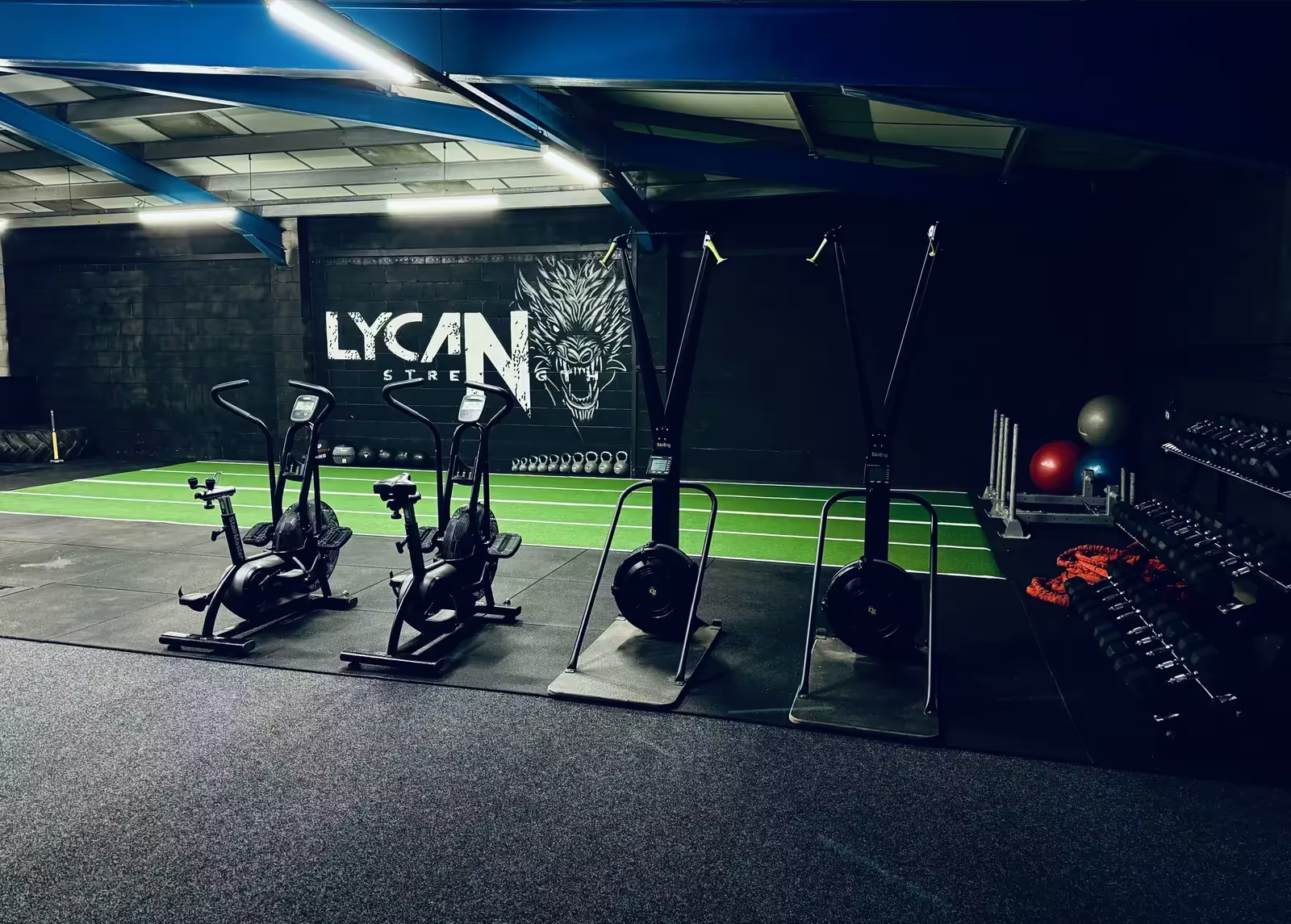
- Cycling and the air bike: low impact with little muscle damage, so among the least interfering options.
- Rowing and SkiErg: full body, low impact and great for building an engine alongside lifting.
- Sled pushes and pulls: mostly concentric work that builds leg strength endurance with minimal soreness. Excellent for lifters; see the sled push guide.
- Running: brilliant for fitness and essential for runners and HYROX athletes, but its impact and lowering forces make it the most interfering in large volumes. Build it up gradually.
- Swimming and walking: very low interference and ideal for easy aerobic work and active recovery.
If strength is your priority, lean on bikes, rowers and sleds for most of your conditioning, and keep running to an amount your legs recover from comfortably. Mixing modalities through the week also spreads the repetitive strain, so no single area takes all of it.
Mostly easy, some hard
Most of your conditioning should be easy, often called zone 2: a pace where you can hold a conversation in full sentences. Easy aerobic work builds the heart and lungs, speeds up recovery between sets and sessions, and creates very little fatigue. Two or three sessions of 20 to 45 minutes a week is plenty for most lifters.
Add one or two harder sessions a week for top-end fitness: intervals on a bike or rower, sled circuits or mixed conditioning. Keep them short and sharp rather than long and grinding. Six to ten hard efforts of 30 seconds to 2 minutes, with equal or longer rests, is ample. Our guide to heart rate training for HYROX explains the intensity zones.
Scheduling: order and spacing
Timing is where most of the interference can be avoided:
- Separate hard sessions: do heavy lifting and hard conditioning on different days where possible, or at least six hours apart.
- Lift first: if both happen in one session and strength is the priority, lift first, then condition.
- Protect heavy leg days: avoid hard running or intervals the day before a heavy squat or deadlift session.
- Place easy cardio anywhere: easy aerobic work can go on rest days or after upper body sessions at very little cost.
A simple week might be: Monday heavy lower body, Tuesday easy bike or row, Wednesday heavy upper body, Thursday intervals, Friday full body strength, and a longer easy session or walk at the weekend.
Keep lifting heavy
When conditioning increases, the most common mistake is letting lifting drift towards light, high rep circuits. That is exactly what loses strength. Keep at least one or two heavy lifts per session in the 3 to 6 rep range, even if you reduce the number of sets.
Strength is well maintained with relatively little volume as long as the intensity stays high. Two sessions a week with a few heavy sets of your main lifts can hold most of your strength through a conditioning-heavy phase, such as the build-up to a HYROX race.
If you are preparing for a race, it is fine to accept a small dip in your heaviest lifts during the final block. The goal then is to arrive fit and strong enough, not to set gym records at the same time.
Fuel and recover properly
Extra conditioning costs energy. Add it without eating more and you drift into a calorie deficit, and strength and recovery suffer. Many people blame cardio for lost strength when under-eating is the real cause.
Carbohydrate is the main fuel for hard conditioning and helps you recover between sessions; see carbohydrates for performance. Keep protein at roughly 1.6 to 2.2 g per kg of body weight per day, sleep seven hours or more where you can, and build in a lighter week every month or two. Timing helps too: a meal with carbohydrate and protein a couple of hours before a hard session, and another afterwards, keeps you fuelled for both kinds of training.
Signs the balance is wrong
- Main lifts dropping for three or more weeks in a row.
- Legs constantly heavy on squat days.
- Resting heart rate creeping up and sleep getting worse.
- Dreading sessions you used to enjoy.
If you notice these, reduce conditioning volume, especially running, and take a lighter week before building back up. Lycan Strength's Engine classes aim to 'build lasting cardiovascular health', and every class is scalable, so it is easy to choose a lighter effort in weeks when lifting is the priority. The class timetable shows where they sit alongside the strength sessions.
Members' guide
Keep reading with your free week
The full guide is for members and people on a free trial. Claim 7 days free and it opens straight away on this device, along with every other guide.
Already a member? Log in to read it
Unlock the full guide
Seven days of classes, free. We will be in touch to book your first session.
Questions
Does cardio reduce muscle gains?
Only modestly for most people, mainly when volumes are high and sessions are poorly spaced. Sensible amounts of conditioning can even help recovery between sets.
What is the best cardio for lifters?
Cycling, rowing and sled work interfere least with strength. Running is fine in moderate volumes but causes more fatigue in the legs.
Should I do cardio before or after weights?
After, if strength is your priority, or on a separate day. Hard cardio first reduces the quality of your lifting.
How much cardio should a lifter do?
Two or three easy sessions and one or two harder sessions a week suits most lifters who want better fitness.
General guidance for healthy adults. If you have a medical condition, injury or are pregnant, check with a health professional before changing your training or diet.