
- Hypertrophy is muscle size; strength is the maximum force you can produce.
- Strength depends on skill and nervous system adaptations as well as muscle size.
- Strength work uses heavier loads, lower reps and longer rests.
- Most people do best with heavy work first in a session, then moderate rep accessories.
What drives strength beyond muscle size
Strength is partly a skill. When you practise a heavy squat, your nervous system learns to recruit more muscle fibres, fire them faster and coordinate the muscles around each joint so force goes where it should. That is why beginners get much stronger in their first weeks, long before their muscles have grown noticeably. It is also why strength tends to return quickly after a break: the skill of the lift is well retained, even if some muscle has been lost.
Specificity matters too. Heavy squats make you better at heavy squats. You can build big quads on the leg press and still find a heavy back squat awkward, because you have not practised bracing under a bar at near-maximal loads. If you care about the number on a particular lift, you need to lift heavy on that lift regularly.
Tendons and connective tissue also adapt to heavy loading, becoming stiffer and better at transmitting force. That is part of why strength keeps improving when muscle size plateaus, and why heavy lifting helps make you more resilient to injury.
How the training differs
In practice, the two styles differ in a handful of ways:
- Reps: strength work sits mostly in the 1 to 6 range; hypertrophy work is usually 6 to 15, with some sets higher.
- Load: strength work uses heavier weights, typically above about 80% of your one rep max; hypertrophy can use a wider spread.
- Rest: heavy strength sets need 3 to 5 minutes; hypertrophy sets usually 1 to 3, with longer on big lifts.
- Exercise choice: strength training centres on a few main lifts; hypertrophy training uses more variety to hit muscles from different angles.
- Effort: strength sets often stop a couple of reps short of failure to protect technique; hypertrophy sets can go closer, especially on machines.
- Volume: hypertrophy usually calls for more total sets per muscle each week.
Both styles still rely on progressive overload. The difference is what you progress: heavier loads for a few reps, or more reps and sets with moderate loads. For choosing the numbers, see how many sets and reps to do.
Which should you prioritise?
For most people who want to be fit, healthy and look good, a mix of both is ideal. You do not need to choose one forever. What you should choose is an emphasis for each phase of training.
- New to lifting: moderate reps (6 to 12) on big lifts build both size and strength while you learn technique.
- Want to look more muscular: emphasise hypertrophy, with some heavier work to keep strength moving. Our guide on how to build muscle covers the rest.
- Want a bigger squat, bench or deadlift: emphasise strength, supported by hypertrophy blocks that build the muscle future strength needs.
- Hybrid or HYROX athlete: lean towards strength. Heavy, low volume work builds force without adding lots of fatigue or extra body weight to carry round a course.
Worried about getting bulky? Muscle gain is slow and takes deliberate effort and usually a calorie surplus. Nobody accidentally ends up looking like a bodybuilder from three strength sessions a week.
Age and injury history matter as well. Many lifters over 40 find their joints prefer sets of 5 to 10 over very heavy singles, and they still get very strong that way.
How to combine both in one programme
The simplest method is to start each session with a heavy lift in the 3 to 6 rep range, then move to moderate rep accessory work. For example: back squat 4 x 5, then Bulgarian split squats 3 x 10 and leg curls 3 x 12. One session covers both goals.
Another option is to alternate the emphasis by day, with a heavier upper day and a lighter, higher rep upper day each week, or by block, spending four to six weeks focused on hypertrophy and then four to six on strength. That longer-term planning is covered in periodisation basics.
Whichever structure you use, keep at least some heavy work and some moderate rep work all year. Dropping one entirely for months tends to cost more than it gains.
Where power fits in
There is a third quality alongside these two: power, the ability to produce force quickly. It matters for sport, for jumping and sprinting, and for staying capable as you age. It needs its own style of training, with lighter loads moved fast, and it usually comes first in a session, while you are fresh. Our guide to power training explains how it fits in.
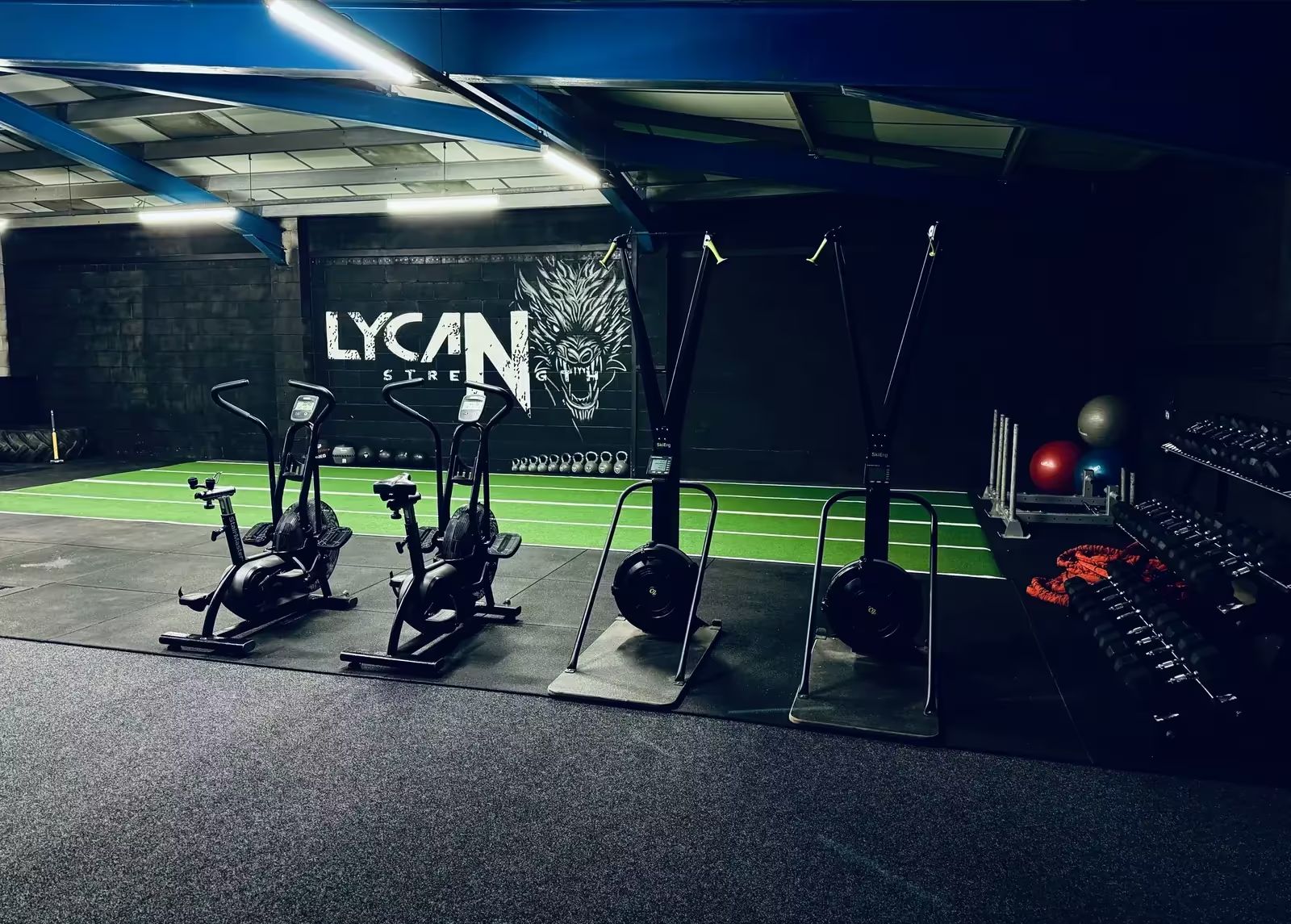
The Lycan Strength timetable splits strength work into Full Body, Upper and Lower classes, and because every class is scalable, coaches can adjust loads and reps to suit what each person is training for. The class timetable shows how they are spread out.
Members' guide
Keep reading with your free week
The full guide is for members and people on a free trial. Claim 7 days free and it opens straight away on this device, along with every other guide.
Already a member? Log in to read it
Unlock the full guide
Seven days of classes, free. We will be in touch to book your first session.
Questions
Is hypertrophy training good for strength?
Yes, over the long term. Bigger muscles have more potential to produce force, but you still need some heavy, specific practice to express that strength on a given lift.
Can I train for strength and size at the same time?
Yes. Start sessions with heavy, low rep work on a main lift, then use moderate rep accessories. Most people get very good results this way.
Why am I strong but not very muscular?
Strength depends heavily on skill and the nervous system, so some people get strong with modest size. More hypertrophy volume and a slight calorie surplus usually help.
General guidance for healthy adults. If you have a medical condition, injury or are pregnant, check with a health professional before changing your training or diet.