
- Most of your progress happens between physio sessions, not during them
- Short, specific programmes are far easier to stick to than long lists
- Attaching exercises to an existing habit makes them automatic
- Tell your physio honestly what you are managing so the plan can fit
- Exercises should get harder over time; if they do not, ask why
Why home exercises matter so much
Physio appointments are usually weeks apart. In between, your muscles, tendons and joints are adapting, or not, depending on what you do. Your home exercise programme is the main way your physio's plan turns into real change in strength, movement and pain.
Research on rehab consistently shows that people who do their exercises regularly tend to recover better. Yet many people find it hard to keep going, especially once the pain eases. That is normal, and it is a practical problem with practical solutions, not a character flaw.
Why people struggle
- The programme is too long, so it feels like a chore
- It is not clear why each exercise matters
- The exercises are forgotten or done with the wrong technique
- They cause pain and it is not clear whether that is OK
- Life gets busy and there is no fixed time for them
- Pain eases, so they seem less important
- The exercises never change, so progress stalls and motivation drops
Almost all of these can be fixed with a better-designed plan and an honest conversation with your physio.
A typical example: a 45-year-old with a sore Achilles is given eight exercises, manages them all for the first week, then misses a few days during a busy spell at work and never quite restarts. A shorter programme of three key exercises, tied to a daily routine, would probably have kept going.
Make the programme work for you
A good home programme is short and specific. For most people, three to five exercises that take 10 to 20 minutes is plenty. If yours is longer, ask your physio which ones matter most right now. Understanding the purpose of each exercise also helps, because it is easier to prioritise something when you know what it is doing for you.
Ask for clear instructions in a format you will use: written notes, photos, or a short video on your phone of you doing each exercise correctly in the session. Being shown once and trying to remember it three days later is a common reason technique drifts.
Keep equipment simple. A resistance band, a step, a chair and a single dumbbell or kettlebell cover most home rehab. If your programme needs gym kit, it may be easier to fold it into your normal gym sessions.
Build it into your day
The most reliable way to make exercises happen is to attach them to something you already do every day. This is called habit stacking, and it works because the existing habit acts as a trigger. Our guide to building a fitness habit explains the approach in more detail.
- Calf raises while brushing your teeth
- Sit to stands before sitting down to watch television
- Band exercises straight after your morning coffee
- Balance work while the kettle boils
- Rehab exercises as the warm-up for your usual gym session
Tracking helps too. A simple tick chart on the fridge, a note on your phone, or a line in your training log makes it obvious when you have skipped a few days and gives you a record to show your physio.
Consistency beats intensity. Doing your exercises most days at a moderate effort will almost always do more than an occasional heroic session. If you miss a day, just pick it up the next day rather than trying to catch up.
What to do if it hurts
Your physio should tell you how much discomfort is acceptable for your condition. For many problems, particularly tendon and persistent pain, mild discomfort during exercise, up to about 3 or 4 out of 10, is fine if it settles within 24 hours and does not build over the week.
If an exercise causes sharp pain, pain that lingers into the next day, or new symptoms such as pins and needles, stop that exercise and let your physio know. Usually a simple change in range, load or position fixes it. Our guide to exercise rehabilitation explains how pain is used as a guide.
Fitting rehab around training
If you already train, your rehab does not have to be a separate chore. Many exercises can be slotted into your warm-up, done between sets of other lifts, or added as a short finisher. A knee rehab programme might sit at the start of a lower-body session; shoulder work might go between sets of rows or presses.
The important thing is that the rehab exercises are done with good quality and are not rushed at the end when you are tired. If you tend to skip the last part of a session, put the rehab first.
As you improve, the line between rehab and training blurs. The goal is for your rehab exercises to become part of your normal programme, loaded and progressed like everything else, so the strength you have built stays built.
Keep it progressing
Rehab exercises should get harder as you get better. If you have been doing the same three sets of ten with the same band for six weeks, the programme has probably stopped doing its job. Ask your physio how and when to progress: more weight, more reps, slower tempo, a harder variation, or moving the exercise into your gym training.
Be honest in your sessions. If you only managed two sessions last week, say so. Your physio would much rather adjust the plan to something you will do than keep prescribing a programme that is not happening. Our guide to how many physio sessions you need explains why this part matters so much for the overall timeline.
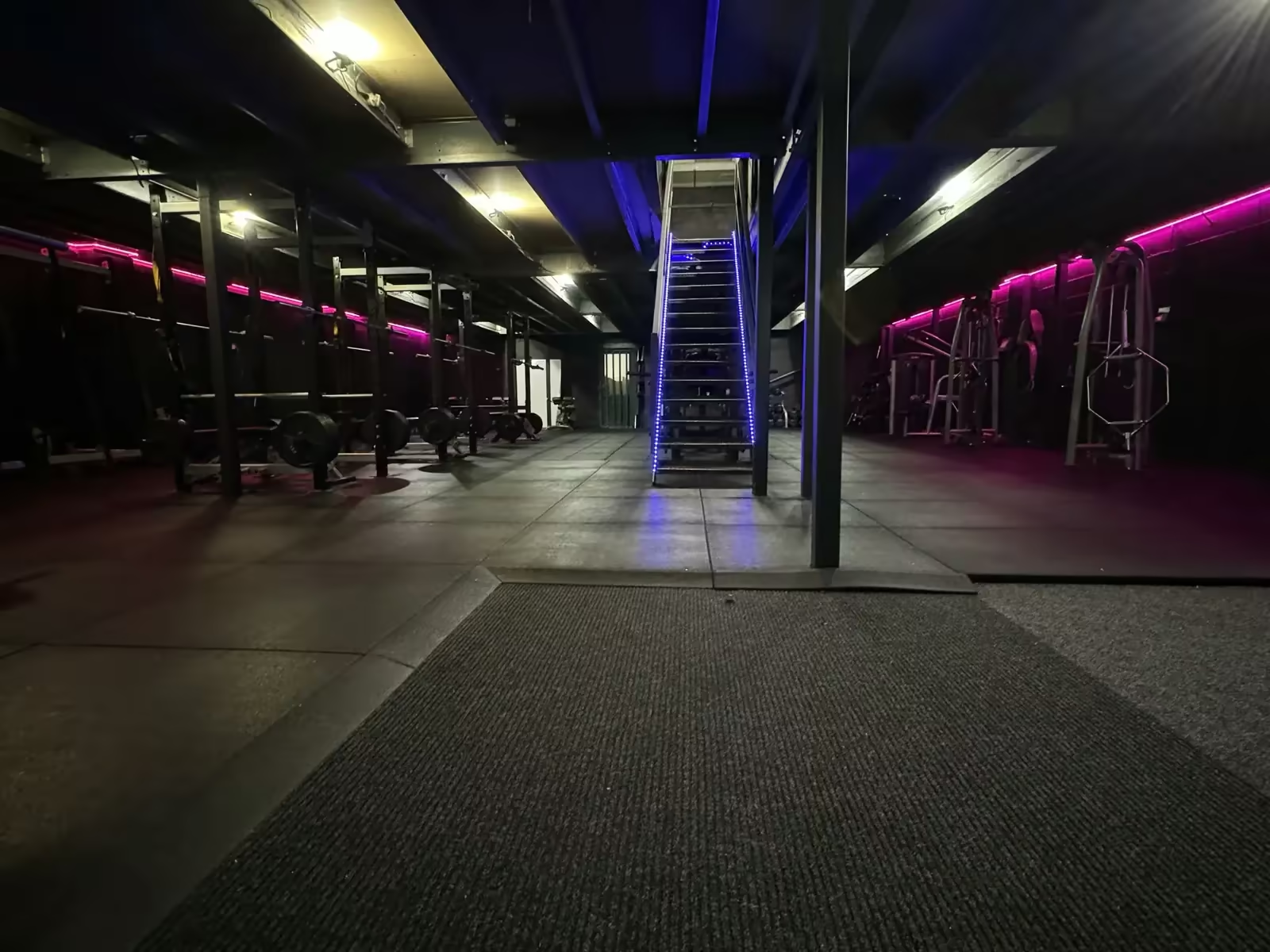
At Lycan Strength, home exercise programmes are part of the on-site physio's treatment, alongside manual therapy, therapeutic exercise and injury prevention education, and members get 20% off. You can book a physio appointment online.
Questions
How often should I do my physio exercises?
It depends on the exercise and stage. Early rehab is often daily, while strength work is usually two to four times a week. Your physio will tell you what suits your plan.
What if I forget how to do an exercise?
Ask your physio for photos or a short video in the session. If in doubt, skip that exercise until you can check it rather than guessing.
Can I stop my exercises when the pain goes?
Pain usually settles before strength fully returns. Keep going until your physio agrees you are ready, and consider keeping some exercises in your routine long term.
How long should a home exercise programme take?
Most effective programmes take 10 to 20 minutes. If yours takes much longer, ask your physio which exercises matter most.
This page is general information, not a diagnosis. If you are worried about a symptom, speak to a physiotherapist, your GP or NHS 111.
