
- Every exercise can be made easier or harder with a few simple levers
- Scale to keep good technique and the intended effort, not to dodge the work
- A scaled version done well beats the full version done badly
- Progress by moving one lever at a time, not all of them at once
What scaling actually means
In any group session you will see people doing what look like different exercises. One person does push-ups on the floor, another with hands on a box, a third against a wall. They are all training the same movement pattern, scaled to their level. That is scaling: changing an exercise so it delivers the intended effect for the person doing it.
The point is not to make training easy. It is to make it right. If a session calls for 10 hard push-ups, someone who can manage two on the floor will get far more from 10 good reps on a box than from two ragged ones and a lot of lying face down. Scaling keeps the training effect the same even when starting points are very different.
It works in both directions. The same levers that make a movement kinder for a beginner make it tougher for someone who has outgrown the standard version.
The six levers coaches pull
- Load: a lighter or heavier weight. The simplest lever, used for squats, deadlifts, presses, sleds and carries.
- Range of motion: squat to a higher box, deadlift from blocks, lower only partway on a push-up, then gradually go deeper.
- Leverage: change your body angle. Push-ups against a wall are easier than on a bench, which are easier than on the floor. A plank on your knees is easier than on your toes.
- Stability: holding onto something, standing on two feet rather than one, or using a machine instead of free weights all make a movement easier to control.
- Speed and complexity: slow a movement down to learn it, take the jump out of a burpee, or break a complex lift into parts.
- Volume and rest: fewer reps, fewer rounds or longer breaks between efforts.
A good coach chooses the lever that protects what the exercise is meant to train. If the aim is leg strength, lowering the load makes sense. If the aim is conditioning, cutting the reps or swapping to a simpler movement may keep your heart rate where it should be. Scaling the wrong lever can quietly turn one kind of session into another.
Examples from common exercises
Here is how some everyday exercises scale, roughly from easier to harder:
- Push-up: wall push-up, incline push-up on a bench, push-up from the knees, full push-up, then a push-up with your feet up on a bench.
- Squat: sit-to-stand from a high box, box squat, goblet squat, then a front or back squat with a barbell.
- Pull-up: ring or suspension trainer row, band-assisted pull-up, slow lowering from the top, full pull-up. Our guide to your first pull-up sets out a full progression.
- Burpee: step back and step in with no push-up, add the push-up, then add the jump at the top. See the burpee technique guide.
- Running: swap to a rower, bike or brisk walk if impact is a problem, or shorten the distance.
- Wall balls and lunges: a lighter ball or lower target, shorter steps, or body weight only.
How to know you have the right version
The right version lets you move with good technique through the whole set, at the effort the session asks for. If you are grinding out reps with your back rounding or knees caving in, you need an easier version. If you finish a hard set feeling you could have done twice as many, you may be ready for a harder one.
Effort scales help. Many coaches use a 1 to 10 rating of how hard something feels, or the number of reps you had left, to set the target. Our guide on RPE and RIR explains both. A strength set might aim for 7 or 8 out of 10, while a steady conditioning piece might sit at 5 or 6.
Scaling up, and scaling back down
Progress by changing one lever at a time. If you have done three sets of 12 incline push-ups with good form for two sessions running, lower the box a little rather than jumping straight to the floor. If your goblet squats feel solid at 16 kg, try 18 or 20 kg before moving to a barbell.
Some days you will scale back down, and that is part of the process. Poor sleep, a stressful week, a cold or a sore shoulder all change what the right version is today. Experienced athletes scale constantly; they simply call it managing their training.
Scaling is also the main tool for working around minor aches. A sore knee might tolerate a box squat to a higher target when a deep squat hurts. If pain persists or gets worse, though, get it assessed rather than scaling around it forever.
Scaling in group classes
In a well-run class, scaling is built in. A coach typically demonstrates the main version and a few alternatives, then moves around the room adjusting weights and movements for individuals. Nobody should be pushed into the hardest option, and choosing a scaled version is never a sign that you are not trying.
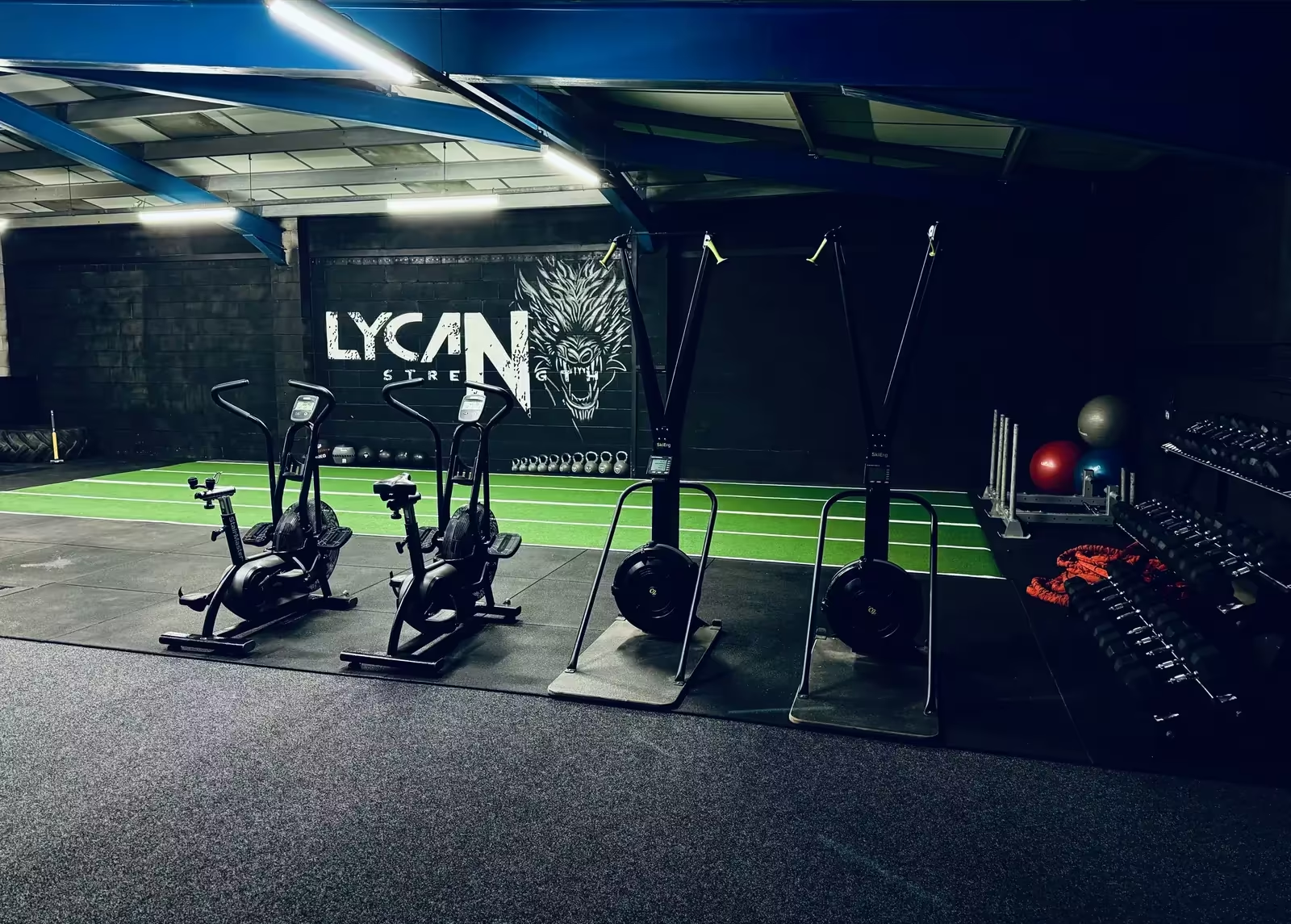
At Lycan Strength every class is scalable, with coaches adjusting movements to the person, which is how people of different ages and fitness levels can share the same session. The class timetable shows what runs each day.
Wherever you train, tell the coach about injuries, pain or anything you are nervous about. The more they know, the better they can choose the right version for you from the very first rep.
Members' guide
Keep reading with your free week
The full guide is for members and people on a free trial. Claim 7 days free and it opens straight away on this device, along with every other guide.
Already a member? Log in to read it
Unlock the full guide
Seven days of classes, free. We will be in touch to book your first session.
Questions
Is doing a scaled version cheating?
No. Scaling is how you get the intended training effect at your current level. A harder version done badly usually gives less benefit and more risk.
How quickly will I move to the full version?
It depends on the exercise and the person. Some beginners reach full push-ups in a couple of months, while pull-ups can take much longer.
Can I scale an exercise around an injury?
Often, yes, by changing the range, the load or the exercise itself. If something is painful, get advice from a physio or GP about what is safe.
Who decides how to scale an exercise?
In a class, the coach suggests options and you give feedback on how they feel. Over time you learn to choose the right version yourself.
General guidance for healthy adults. If you have a medical condition, injury or are pregnant, check with a health professional before changing your training or diet.