
- Most HYROX classes follow a warm-up, technique, main workout and cool-down structure.
- Different sessions focus on strength, engine or race performance.
- Every movement can be scaled, so beginners and experienced racers train side by side.
- Classes cover the stations well. Add easy running of your own on other days.
- Tell the coach about injuries and race dates so they can adjust your session.
What HYROX classes are for
HYROX classes exist to prepare you for one specific race. That makes them different from general fitness classes, where the aim is broad fitness and variety. In a HYROX class, the stations, the order they come in, running on tired legs and pacing are all part of the programming.
They are also a practical way to train. You get a coach watching your technique, a plan that someone else has thought through, other people to push you and access to equipment such as sleds that you are unlikely to have at home. For many people, that combination is the difference between training consistently and not training at all.
Classes also help with the parts of HYROX that are hardest to judge alone. A coach can tell you whether your wall ball squats reach depth, whether your sled position is costing you, and whether you are pacing sensibly or going out too hard every time.
The usual shape of a session
Every gym does things slightly differently, but a well-run HYROX class usually includes:
- A warm-up that raises your heart rate and prepares the joints and muscles you are about to use.
- Technique or skill work on one or two stations, such as sled body position, SkiErg sequencing or wall ball depth.
- The main workout, which might be strength work, intervals, station and run combinations or a race-style piece.
- A cool-down, bringing your heart rate down with some easy movement or mobility.
The coach typically explains the session, demonstrates the key movements and suggests loads and distances for different levels. During the workout, a good coach moves around the room, correcting technique, adjusting weights and keeping people working at the right effort.
If you have done classes elsewhere, much of this will feel familiar. The guide to what happens in a strength class covers the same basics for strength sessions.
Three kinds of HYROX session
Many gyms split their HYROX programming into sessions with different emphases, because the race needs all of them.
- Strength-focused sessions usually centre on the heavier stations: sled pushes and pulls, loaded lunges, carries, and supporting lifts such as squats and deadlifts. They build the capacity to move heavy loads while tired.
- Engine-focused sessions usually involve intervals on machines and runs, sometimes mixed with lighter stations such as wall balls and burpee broad jumps. They build aerobic fitness and the ability to recover between efforts.
- Race-performance sessions tend to be longer pieces in race order, practising pacing, transitions and running after stations. Mini and half simulations often live here.
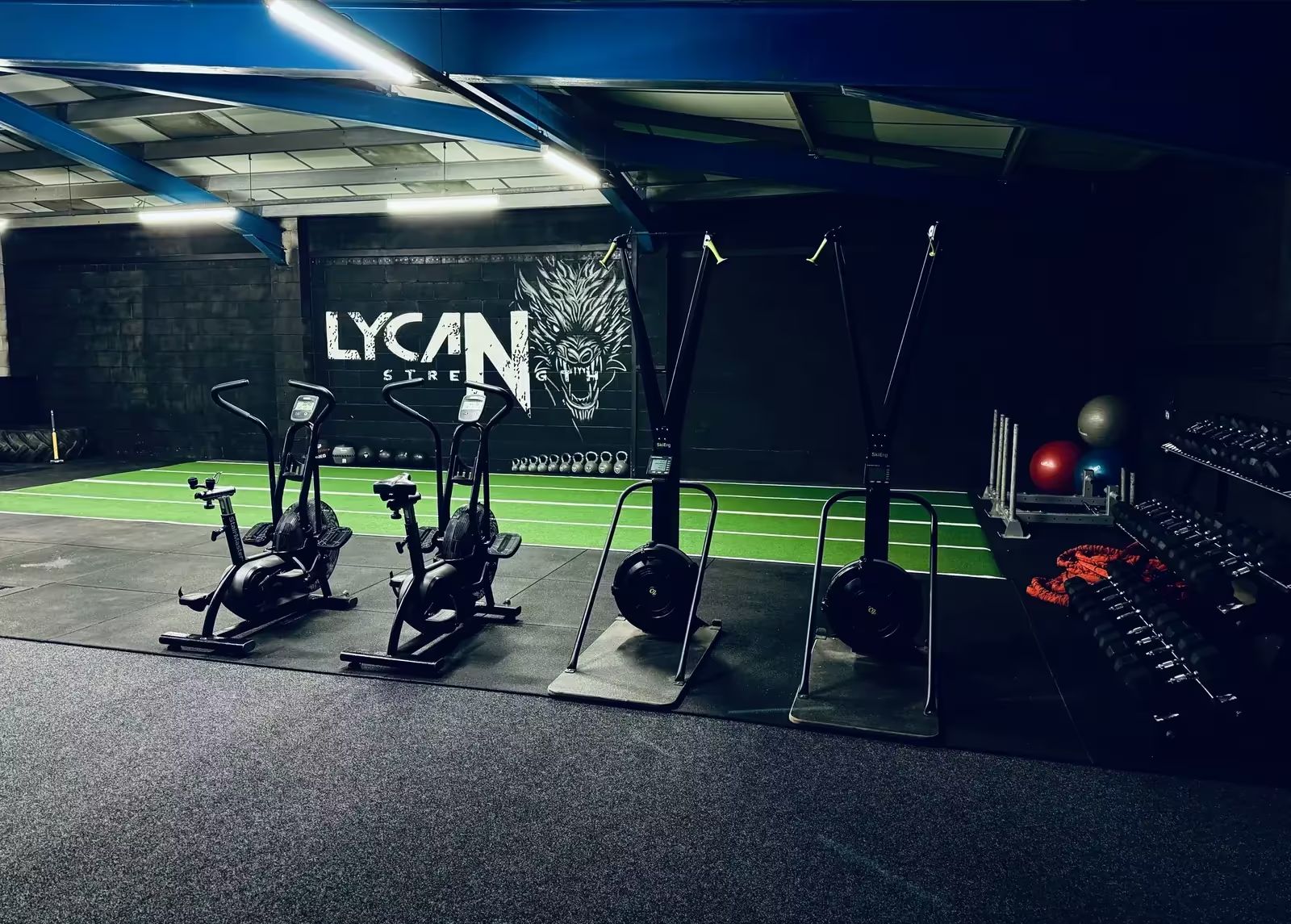
Lycan Strength is an official HYROX affiliated gym but does not run HYROX-named classes. Members build strength for the stations in the Full Body, Upper and Lower classes and conditioning in Engine and Lycan Shred, then race together in doubles and relays. See how the week fits together on the timetable.
How scaling works
HYROX classes often mix complete beginners with people who have raced several times. That works because every movement can be scaled. A coach might suggest a lighter sled, shorter distances, fewer reps, a lighter wall ball or a step-back burpee instead of a jump.
Scaling is not a lesser version of the workout. It is the right version for you, today. Someone recovering from a cold, returning from injury or in their first month of training should be doing a different session from someone two weeks out from a race, even if they are standing side by side. The guide to how exercises are scaled explains the thinking.
Classes versus training on your own
Classes are excellent for the stations, strength and conditioning, and for the motivation that comes from training with others. What they cannot always give you is enough easy running, because easy running is best done at your own pace, often alone or with one other person.
Most people training for a race do best combining two or three classes a week with one or two easy runs of their own. The guide to group classes vs training on your own compares the two approaches more broadly.
Getting the most from each class
- Arrive a few minutes early so you are not rushing the warm-up.
- Tell the coach about any injuries, niggles or an upcoming race.
- Write down your loads, distances and times so you can see progress.
- Focus on technique first, especially in your first few weeks.
- Do not race the person next to you in every session. Train at your level.
- Stay for the cool-down. It helps you recover for the next session.
Consistency matters more than any single session. Two classes a week for six months will get you much further than five a week for a month.
Think about which sessions suit your week, too. If you have a hard day at work every Thursday, an engine session that evening may not be the best idea. Pick the classes you can attend reliably, then build the rest of your training around them.
Your first HYROX class
If you have never done a HYROX class, the first one can feel intimidating. It should not be. Everyone in the room had a first session too, and the coach will have seen plenty of beginners. Expect to spend some time learning the stations, working at a comfortable level and finishing tired but not wrecked.
The 7-day free trial at Lycan Strength includes unlimited class access and a complimentary fitness assessment, which is a sensible way to try the strength and conditioning classes before committing.
Members' guide
Keep reading with your free week
The full guide is for members and people on a free trial. Claim 7 days free and it opens straight away on this device, along with every other guide.
Already a member? Log in to read it
Unlock the full guide
Seven days of classes, free. We will be in touch to book your first session.
Questions
What happens in a HYROX class?
Usually a warm-up, some technique work on one or two stations, a main workout mixing stations with running or conditioning, and a cool-down, all scaled to each person.
Can beginners join a HYROX class?
Yes. Every movement can be scaled, so beginners and experienced racers can train in the same session at their own level.
How many HYROX classes a week should I do?
Two or three classes a week, plus one or two easy runs of your own, suits most people training for a race.
General guidance for healthy adults. If you have a medical condition, injury or are pregnant, check with a health professional before changing your training or diet.